
Monsoon Health Guide for Elderly in Delhi NCR: Protecting Seniors During the Rainy Season
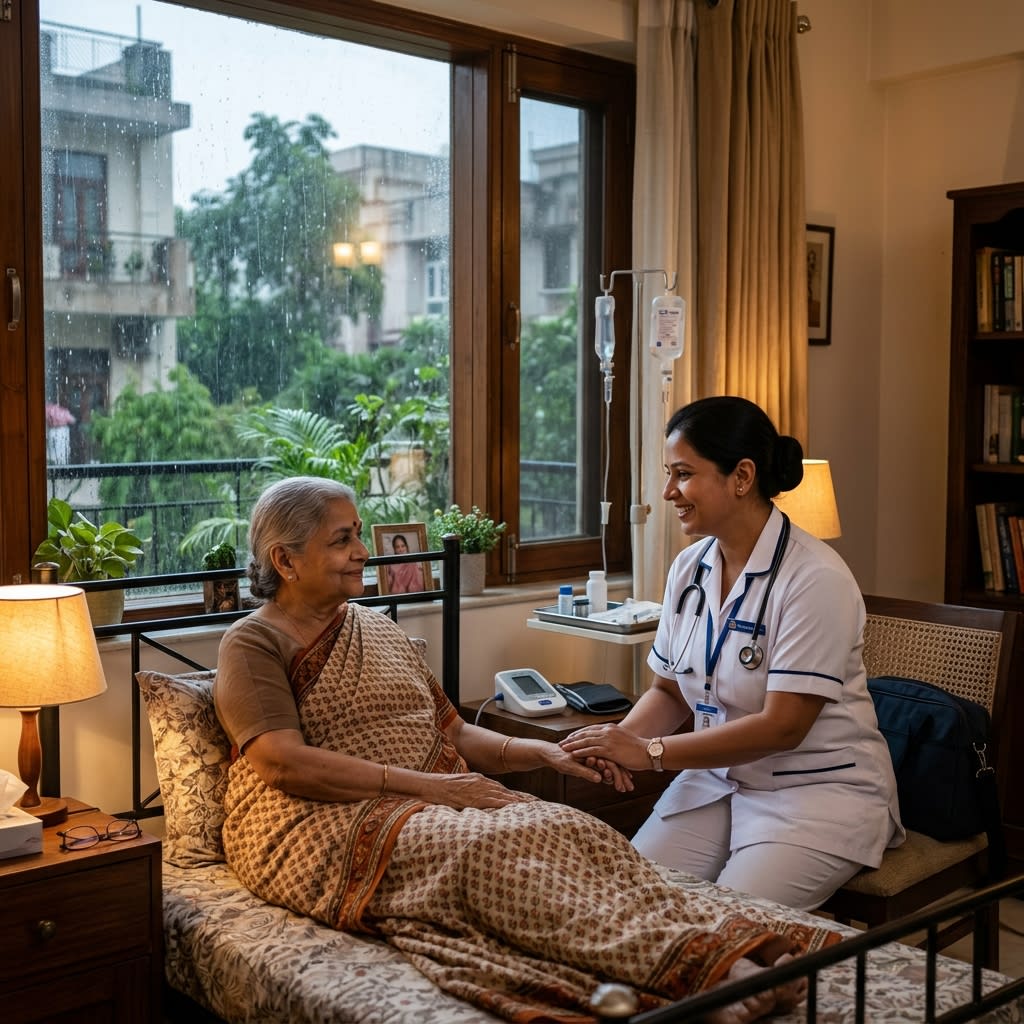
Delhi's monsoon season – typically from late June through September – is a time of relief from the scorching summer heat, but for elderly residents of Delhi NCR, it brings a unique set of health challenges. From Noida to Gurgaon, Faridabad to Ghaziabad, the monsoon's humidity, waterlogging, and vector proliferation create conditions that can be dangerous for senior citizens with compromised immunity.
At NurseNest Care, our experienced home nurses have cared for hundreds of elderly patients across Delhi NCR during monsoon seasons. Here's our comprehensive guide to keeping your senior family members safe and healthy.
Why Are Seniors More Vulnerable During Monsoon?
Ageing bodies respond differently to monsoon conditions:
- Weakened immunity – The immune system declines with age, making seniors 3x more susceptible to monsoon infections like dengue, malaria, typhoid, and gastroenteritis
- Reduced thermoregulation – Elderly bodies struggle to adapt to rapid temperature swings between hot days and cool, wet evenings
- Chronic disease complications – Humidity worsens arthritis pain, respiratory conditions (COPD, asthma), and skin problems
- Balance and mobility issues – Wet floors, slippery surfaces, and poor visibility increase fall risk dramatically
- Medication sensitivity – Humidity can affect medication storage and absorption patterns
Top Monsoon Health Risks for Elderly in Delhi NCR
1. Waterborne Diseases
Delhi's ageing water infrastructure means contamination risk rises sharply during monsoon:
- Typhoid and cholera – Caused by contaminated drinking water; symptoms include high fever, abdominal pain, and diarrhoea
- Hepatitis A – Spread through contaminated water and food; causes liver inflammation
- Gastroenteritis – Loose motions and vomiting that can cause severe dehydration in elderly within hours
Prevention:
- Drink only boiled or RO-purified water – no exceptions
- Avoid street food and raw salads during monsoon
- Wash fruits and vegetables with clean water before consumption
- Keep oral rehydration salts (ORS) at home for emergency use
2. Vector-Borne Diseases (Dengue, Malaria, Chikungunya)
Delhi NCR sees a massive surge in mosquito breeding during monsoon:
- Stagnant water in coolers, flower pots, and construction sites become breeding grounds
- Dengue symptoms – High fever, severe headache, pain behind eyes, joint and muscle pain, rash
- Malaria symptoms – Intermittent fever with chills, sweating, headache, nausea
Prevention:
- Empty and clean all water containers weekly (coolers, buckets, plant saucers)
- Use mosquito nets over beds – especially for afternoon naps
- Install window mesh screens throughout the home
- Apply safe mosquito repellent cream on exposed skin (consult doctor for elderly-safe options)
- Dress in full-sleeved, light-coloured clothing during dusk and dawn
3. Respiratory Infections
Humidity and damp conditions promote mould growth and respiratory issues:
- Fungal infections in lungs can worsen COPD and asthma
- Common cold and flu spread rapidly in damp, crowded conditions
- Allergic bronchitis triggered by mould spores and dust mites
Prevention:
- Use a dehumidifier in bedrooms (maintain 40-60% humidity)
- Ensure proper ventilation during dry spells
- Check for and address any water leaks or wall dampness immediately
- Keep nebulisers and inhalers readily available for asthma/COPD patients
4. Skin Infections
High humidity creates perfect conditions for fungal and bacterial skin infections:
- Fungal infections – Between toes, in skin folds, groin area
- Bacterial skin infections – Cellulitis, especially in diabetic patients
- Eczema flare-ups – Humidity worsens existing skin conditions
Prevention:
- Bathe daily and dry skin thoroughly, especially in skin folds
- Wear loose, breathable cotton clothing
- Change undergarments daily; wash clothes promptly
- Apply antifungal powder in moisture-prone areas (after doctor consultation)
5. Falls and Injuries
Wet floors are the #1 cause of elderly injuries during monsoon:
- Bathroom falls increase by 60% during rainy season
- Outdoor walks become hazardous due to slippery surfaces and waterlogging
- Poor lighting during overcast days reduces visibility
Prevention:
- Install anti-slip mats in bathrooms, kitchen, and near doorways
- Add grab bars next to toilets and in showers
- Ensure adequate indoor lighting – use nightlights in hallways and bathrooms
- Keep floors dry – mop immediately if water is tracked in
- Use non-slip footwear indoors
Essential Monsoon Care Checklist for Elderly
- ✅ Stock up on prescribed medications (avoid running out during heavy rain days)
- ✅ Keep a first-aid kit updated with ORS, antiseptic, bandages, and thermometer
- ✅ Store emergency numbers – doctor, ambulance, and NurseNest Care helpline
- ✅ Schedule regular health check-ups – blood pressure, blood sugar, and kidney function
- ✅ Ensure proper diet – warm, freshly cooked meals with immunity-boosting ingredients (turmeric, ginger, garlic)
- ✅ Maintain medication timing – set alarms for all daily medicines
- ✅ Get flu vaccination if recommended by the doctor
How NurseNest Care Helps During Monsoon
Our professional home nursing services are specially designed for Delhi NCR's monsoon challenges:
- 24/7 trained nurse availability – No need for elderly to travel to hospitals in heavy rain
- Daily vital monitoring – Blood pressure, temperature, blood sugar, and SpO2 checks
- Medication management – Ensuring proper storage and zero missed doses
- Infection watch – Early detection of dengue, malaria, or waterborne disease symptoms
- Fall prevention – Mobility assistance, especially in wet conditions
- Nutrition support – Ensuring proper hydration and monsoon-safe meal preparation
- Emergency response – Quick action if any health emergency arises
NurseNest Care – Professional Nursing Care at Home, Because Your Parents Deserve the Best Protection This Monsoon
Related home-nursing services
Hospital-trained registered nurses across Delhi NCR for the care needs this article covers.