
Dementia and Alzheimer's Care at Home in Delhi: A Compassionate Guide for Families
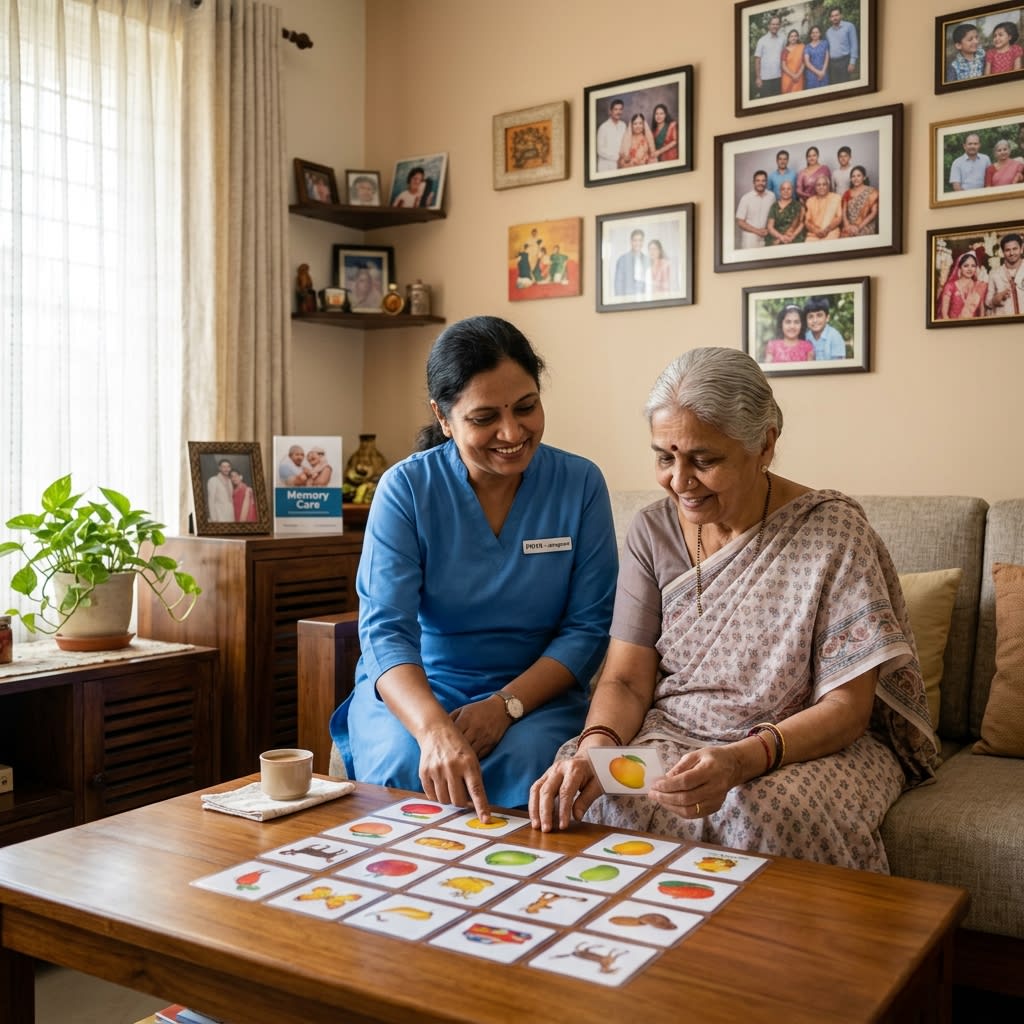
Dementia is not a single disease – it is an umbrella term for a group of conditions that cause progressive decline in memory, thinking, behaviour, and the ability to perform everyday activities. Alzheimer's disease is the most common type, accounting for 60-80% of cases.
India has over 5.3 million people living with dementia, and this number is expected to double by 2035. In Delhi NCR, where the elderly population is growing rapidly, families increasingly face the challenge of caring for loved ones whose minds are slowly fading. At NurseNest Care, our compassionate nurses are specially trained to provide dementia care at home with patience, dignity, and expertise.
Understanding the Stages of Dementia
Early Stage (Mild)
Often dismissed as "normal ageing":
- Forgetting recent conversations or events
- Difficulty finding the right words
- Losing track of time and dates
- Getting lost in familiar places (e.g., their own neighbourhood in Delhi)
- Difficulty managing finances or paying bills
- Mood changes – withdrawal, anxiety, or irritability
Middle Stage (Moderate)
The longest stage, lasting several years:
- Significant memory loss – forgetting family members' names, their own address
- Confusion about time, place, and people
- Need for help with daily activities – bathing, dressing, toileting
- Behavioural changes – wandering, repetitive questions, sundowning (evening agitation)
- Sleep disturbances – reversed sleep-wake cycle
- Difficulty recognising familiar objects and their uses
Late Stage (Severe)
Requires round-the-clock care:
- Complete dependence for all activities of daily living
- Loss of ability to communicate verbally
- Difficulty swallowing (dysphagia)
- Loss of bladder and bowel control
- Increased vulnerability to infections, especially pneumonia
- Bedridden – requiring full nursing care
Creating a Safe Home Environment
Home safety is critical for dementia patients, especially in Delhi homes:
General Safety
- Remove rugs and loose mats – Tripping hazards that can cause serious falls
- Install locks on kitchen cabinets – Keep knives, matches, gas cylinder keys, and cleaning chemicals locked
- Secure the main door – Use child-proof locks that the patient cannot open independently (prevents wandering)
- Remove mirrors if the patient is frightened by their reflection (common in moderate-severe stage)
- Label rooms with pictures (bathroom with picture of a toilet, bedroom with a bed image)
- Ensure adequate lighting – Night lights in hallways, bathroom, and bedroom to reduce confusion
Bathroom Safety
- Install grab bars near toilet and in shower area
- Use anti-slip mats on the bathroom floor
- Set water heater temperature below 49°C to prevent burns
- Remove bathroom locks (patient might lock themselves in and panic)
Kitchen Safety
- Disconnect or secure the gas cylinder with a lock
- Remove or lock away sharp utensils
- Use an auto-cut electric kettle instead of stovetop boiling
- Keep a fire extinguisher accessible
Daily Care Routines
Morning Routine
- Wake the patient gently at the same time daily – consistency reduces confusion
- Assist with toileting – take them to the bathroom at regular intervals
- Help with bathing – maintain their dignity; explain each step calmly
- Lay out clothes in order (undergarments first, then shirt, then pants) to simplify dressing
- Serve a familiar breakfast at the same table, same time
Daytime Activities
Keeping the mind active slows cognitive decline:
- Simple puzzles – Jigsaw puzzles with large pieces, sorting games
- Music therapy – Play their favourite old Hindi songs (music memory persists longest)
- Photo albums – Looking at family photos together triggers positive memories
- Light gardening – Watering plants, arranging flowers (supervised)
- Prayer/devotional activities – Familiar religious practices provide comfort and structure
- Short walks – In the garden or terrace with supervision
Managing Difficult Behaviours
Wandering:
- Ensure the patient wears an ID bracelet with name, address, and emergency number
- Inform neighbours and building security about the patient's condition
- Consider a GPS tracking device worn as a watch or bracelet
- Keep a recent photograph readily available in case they go missing
Sundowning (Evening Agitation):
- Close curtains before sunset and switch on bright lights
- Reduce noise and activity in the evening
- Offer a light, calming snack (warm milk with haldi, banana)
- Play soothing music or familiar bhajans
- Avoid caffeine after noon
Repetitive Behaviour:
- Respond patiently each time as if hearing it for the first time
- Gently redirect attention to another activity
- Do not argue or correct – it increases agitation
- Use distraction – "Let's have some chai" or "Look at this photo"
Nutrition for Dementia Patients
- Small, frequent meals – 5-6 times a day rather than 3 large meals
- Finger foods – When using utensils becomes difficult: roti rolls, sandwiches, fruit slices
- Brain-healthy foods – Walnuts, almonds, fish, turmeric, green leafy vegetables, berries
- Adequate hydration – Offer water/fluids regularly; patients may forget to drink
- Modified textures – Soft or pureed foods when swallowing becomes difficult in later stages
- Supervise meals – Watch for choking; ensure the patient is sitting upright
Supporting Family Caregivers
Caring for a dementia patient is emotionally and physically exhausting:
- Accept help – You cannot do this alone. Professional support is not a sign of failure
- Take breaks – Respite care (a nurse takes over for a few hours) prevents burnout
- Join support groups – Connect with other families facing similar challenges (ARDSI Delhi chapter)
- Maintain your own health – Regular exercise, proper sleep, and social connections
- Plan for the future – Legal and financial planning while the patient can still participate
How NurseNest Care Supports Dementia Care at Home
- Trained dementia care nurses – Experienced in behavioural management, daily care routines, and safety protocols
- 24/7 supervision – Preventing wandering, falls, and accidents
- Personal care – Bathing, dressing, toileting, and grooming with dignity and patience
- Cognitive stimulation – Activities, music, and conversations to slow decline
- Night duty care – Managing sleep disturbances and nighttime wandering
- Medication management – Ensuring all prescribed dementia medications are taken correctly
- Caregiver respite – Giving family members much-needed breaks
NurseNest Care – Compassionate Dementia Care at Home, Because Every Memory Matters
Related home-nursing services
Hospital-trained registered nurses across Delhi NCR for the care needs this article covers.