
Managing Hypertension at Home in Delhi: A Complete Guide to Blood Pressure Control for Families
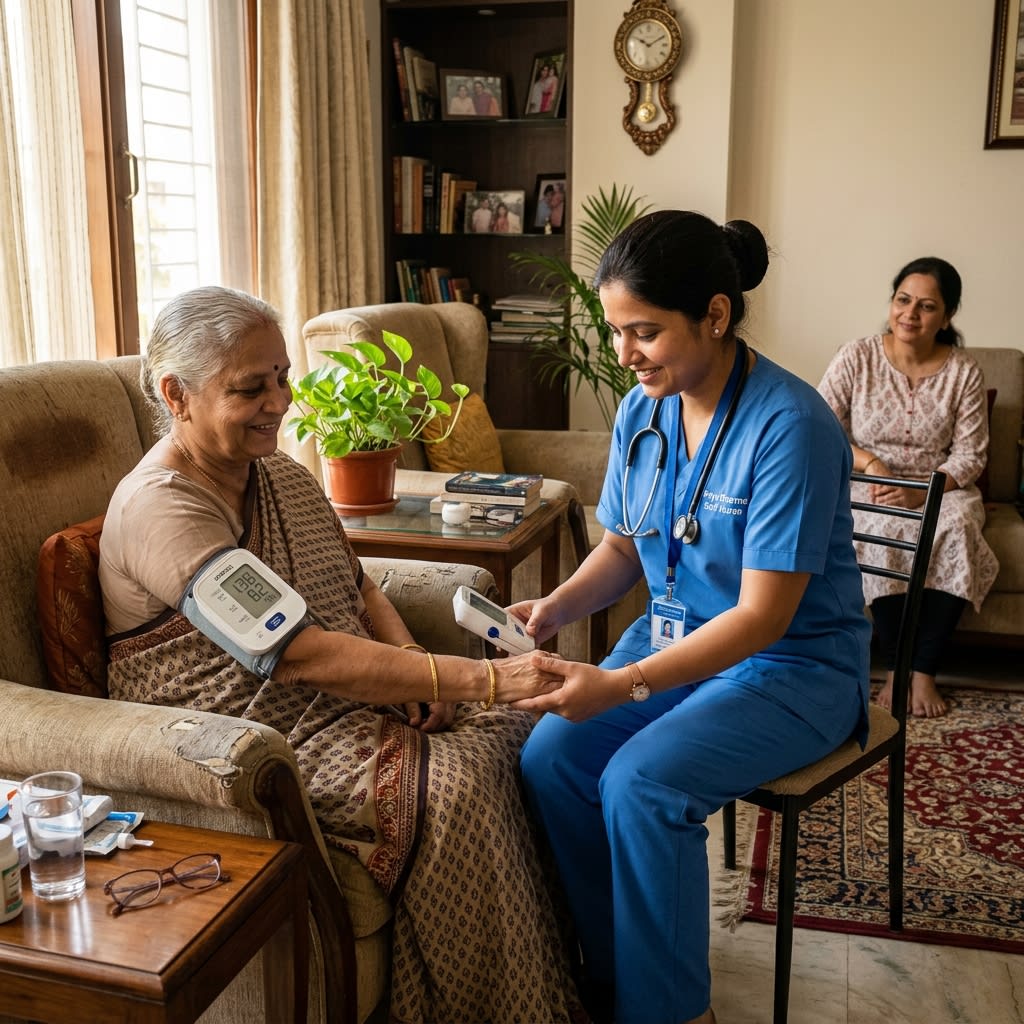
Hypertension (high blood pressure) is often called the "silent killer" because it rarely shows symptoms until serious damage has occurred. In Delhi NCR, the prevalence is alarming – nearly 33% of adults above 30 suffer from hypertension, and among those above 60, the rate exceeds 55%. Yet, awareness and proper management remain dangerously low.
At NurseNest Care, our trained nurses help hundreds of Delhi families manage hypertension effectively at home, preventing heart attacks, strokes, and kidney failure through consistent monitoring and care.
Understanding Blood Pressure Numbers
Blood pressure is measured in two numbers:
- Systolic (upper number) – Pressure when the heart beats (contracts)
- Diastolic (lower number) – Pressure when the heart rests between beats
Blood pressure categories (as per Indian Heart Association 2026 guidelines):
- Normal: Below 120/80 mmHg
- Elevated: 120-129/less than 80 mmHg
- Stage 1 Hypertension: 130-139/80-89 mmHg
- Stage 2 Hypertension: 140/90 mmHg or higher
- Hypertensive Crisis: Above 180/120 mmHg – seek emergency care immediately
Why Hypertension Is Especially Dangerous in Delhi NCR
Delhi-specific factors that worsen hypertension:
- Air pollution – Delhi's PM2.5 levels directly increase blood pressure and cardiovascular risk
- Extreme temperatures – Summer heat (45°C+) and winter cold (2-4°C) both stress the cardiovascular system
- High-stress lifestyle – Long commutes, work pressure, and traffic noise elevate cortisol and BP
- Dietary habits – High-sodium Indian diet (pickles, papad, namkeen, processed foods) drives BP up
- Sedentary living – Limited physical activity due to safety concerns, weather, and urban lifestyle
Comprehensive Home Management Plan
1. Daily Blood Pressure Monitoring
Consistent monitoring is the foundation of hypertension management:
- Measure BP at the same time daily – ideally morning (before medication) and evening
- Sit quietly for 5 minutes before measuring; avoid caffeine and exercise 30 minutes prior
- Use a validated, cuff-based digital BP monitor (avoid wrist monitors for accuracy)
- Record every reading in a BP diary with date, time, and any notes (stress, missed meal, etc.)
- Share the weekly log with your doctor for medication adjustment
2. DASH Diet for Indian Families
The DASH (Dietary Approaches to Stop Hypertension) diet adapted for Indian kitchens:
Foods to increase:
- Fresh vegetables – lauki (bottle gourd), tinda, palak, methi, broccoli, beans
- Fruits – banana (potassium-rich), watermelon, papaya, orange, pomegranate
- Whole grains – ragi roti, jowar roti, oats chilla, daliya khichdi
- Low-fat dairy – buttermilk (chaas), low-fat dahi, paneer in moderation
- Lean proteins – dal, moong sprouts, grilled fish, egg whites
- Garlic, hibiscus tea, and flaxseeds (proven BP-lowering foods)
Foods to strictly limit:
- Salt – maximum 5 grams per day (1 teaspoon); use lemon, herbs, and spices for flavour instead
- Pickles, papad, chutneys, and processed foods (very high sodium)
- Red meat, organ meats, and full-fat dairy
- Fried snacks – samosa, pakora, namkeen, chips
- Alcohol and excessive caffeine (limit to 2 cups of tea/coffee daily)
3. Medication Management
Proper medication adherence prevents 80% of hypertension-related complications:
- Never skip doses – Even if BP readings are normal, continue medication as prescribed
- Take at the same time daily – Set phone alarms or use a weekly pill organiser
- Know your medications – Understand each medicine's purpose (ACE inhibitors, calcium channel blockers, diuretics, beta-blockers)
- Watch for side effects – Dizziness, dry cough, ankle swelling, or excessive urination should be reported to the doctor
- Never self-adjust dosage – Only your doctor should change medications based on BP trends
- Avoid OTC painkillers – NSAIDs (ibuprofen, diclofenac) can raise blood pressure significantly
4. Physical Activity (Safe for Hypertension)
Regular exercise lowers BP by 5-8 mmHg on average:
- Walk 30 minutes daily – Morning walks in parks; indoor walking during extreme weather
- Yoga – Shavasana, Sukhasana, Anulom-Vilom pranayama (avoid inverted poses)
- Light cycling – Stationary cycling for 20 minutes at moderate pace
- Swimming – Excellent low-impact exercise that reduces BP and stress
- Avoid – Heavy weightlifting, sudden intense exercise, or exercising in extreme heat/cold
5. Stress Management
Chronic stress is a major BP driver in Delhi's fast-paced life:
- Deep breathing exercises – 10 minutes morning and night
- Meditation or prayer – proven to reduce systolic BP by 5 mmHg
- Adequate sleep – 7-8 hours; treat insomnia if present
- Social connections – Regular time with family and friends
- Limit news and social media exposure if it causes anxiety
Warning Signs: When to Seek Emergency Care
Rush to the nearest hospital or call an ambulance if BP reading exceeds 180/120 mmHg with any of these symptoms:
- Severe headache that doesn't respond to paracetamol
- Chest pain or tightness
- Difficulty breathing
- Vision changes – blurred vision or seeing spots
- Numbness or weakness on one side of the body (stroke warning)
- Confusion or difficulty speaking
- Nosebleed that won't stop
How NurseNest Care Helps Manage Hypertension at Home
Our trained nurses provide comprehensive hypertension management:
- Twice-daily BP monitoring with detailed recording and trend analysis
- Medication management – Ensuring zero missed doses and proper timing
- Diet support – Guiding families on low-sodium, heart-healthy Indian meal preparation
- Exercise assistance – Supervised walks and gentle exercises
- Doctor coordination – Sharing BP logs and flagging concerning trends
- Emergency recognition – Trained to identify hypertensive crisis and act immediately
NurseNest Care – Professional Blood Pressure Management at Home, Because Prevention Is Better Than a Hospital Emergency
Related home-nursing services
Hospital-trained registered nurses across Delhi NCR for the care needs this article covers.