
Diabetes Management at Home in Delhi NCR: A Complete Guide for Patients and Families
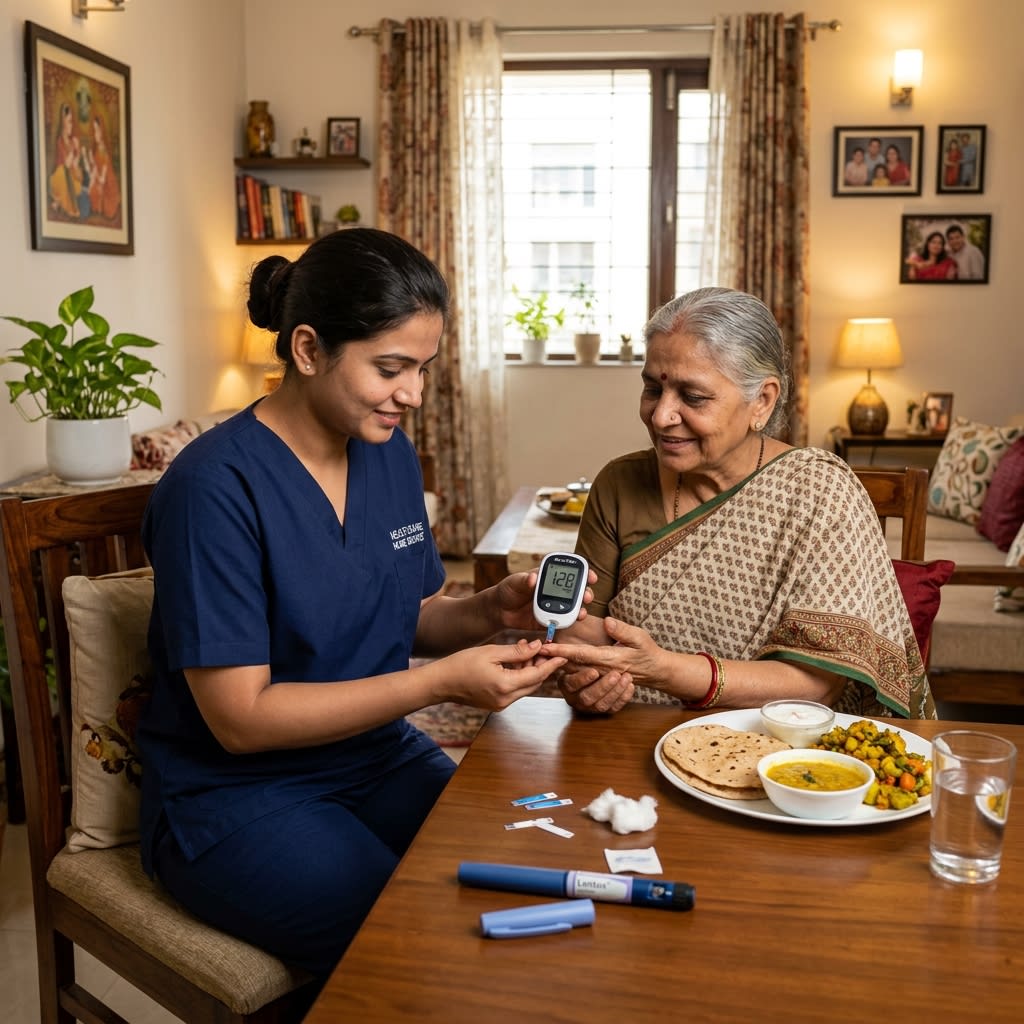
India is the diabetes capital of the world, with over 101 million diagnosed diabetics and another 136 million in the pre-diabetic stage. Delhi NCR, with its sedentary lifestyle, high-stress work culture, and rich dietary habits, has one of the highest prevalence rates in the country – nearly 20% of adults above 40 in Delhi are diabetic.
Diabetes is a 24/7 condition – it doesn't take holidays, and it can't be managed with just a monthly doctor visit. Effective diabetes control happens at home, every single day. At NurseNest Care, our trained nurses help Delhi NCR families manage diabetes comprehensively at home.
Understanding Types of Diabetes
- Type 1 Diabetes – Autoimmune condition; the body doesn't produce insulin. Requires insulin injections from diagnosis. Common in children and young adults.
- Type 2 Diabetes – The body doesn't use insulin effectively (insulin resistance). Most common in India, especially among adults 40+. Can be managed with diet, exercise, oral medicines, and sometimes insulin.
- Gestational Diabetes – Develops during pregnancy; usually resolves after delivery but increases future Type 2 risk.
Daily Blood Sugar Monitoring
Regular monitoring is the cornerstone of diabetes management:
When to Test
- Fasting (morning before eating) – Target: 80-130 mg/dL
- 2 hours after meals (post-prandial) – Target: Below 180 mg/dL
- Before bedtime – Target: 100-140 mg/dL
- HbA1c test every 3 months – Target: Below 7% for most patients
How to Test Correctly
- Wash hands with warm water and soap; dry thoroughly (wet fingers dilute blood, giving false low readings)
- Use the side of the fingertip – less painful than the tip
- Rotate fingers – don't use the same spot repeatedly
- Record every reading with date, time, and meal status in a diabetes diary
- Calibrate your glucometer monthly; check strip expiry dates
Insulin Management at Home
For patients on insulin, proper administration is critical:
Storage
- Unopened insulin vials/pens: Store in refrigerator (2-8°C) – not in the freezer
- In-use insulin: Can be kept at room temperature (below 30°C) for up to 28 days
- Never expose insulin to direct sunlight or extreme heat (important in Delhi summers)
- Do not use insulin that appears cloudy (when it should be clear) or has particles
Injection Technique
- Rotate injection sites – Abdomen, thighs, upper arms, buttocks. Never inject in the same spot within 2 cm
- Clean the site with an alcohol swab; let it dry before injecting
- Pinch the skin gently and inject at a 90-degree angle
- Count to 10 after injecting before removing the needle
- Dispose of needles in a sharps container – never reuse needles
- Time your injection according to the type: rapid-acting (before meals), long-acting (same time daily)
Indian Diabetic Diet Plan
Eating the right foods at the right times is critical for blood sugar control:
Breakfast Options (7-8 AM)
- Moong dal chilla with vegetables + 1 glass buttermilk
- Ragi dosa with sambar + coconut chutney
- Vegetable oats upma + 1 boiled egg
- Multigrain roti + paneer bhurji
Lunch (12:30-1:30 PM)
- 2 multigrain rotis + 1 bowl dal + 1 bowl green vegetable + salad + 1 bowl curd
- Brown rice (limited portion) + rajma/chole + cucumber raita
Evening Snack (4-5 PM)
- Green tea + a handful of roasted chana or almonds
- Vegetable soup (without cream) + 2 multigrain crackers
Dinner (7-8 PM)
- 2 multigrain rotis + grilled fish/chicken + vegetable stir-fry
- Moong dal khichdi + bottle gourd (lauki) + curd
Foods to Avoid
- White rice, white bread, maida-based products (naan, pizza, pasta)
- Sweets, mithai, fruit juices, soft drinks, and sweetened beverages
- Potatoes, arbi (colocasia), and sweet potato in large quantities
- Mangoes, grapes, banana, and chiku (in large quantities)
- Fried foods and packaged snacks
Diabetic Foot Care
Diabetic foot complications cause over 40,000 amputations annually in India – most are preventable:
- Inspect feet daily – Check for cuts, blisters, redness, swelling, or colour changes. Use a mirror to check the soles.
- Wash feet daily with lukewarm water (test temperature with elbow, not foot – diabetics may not feel heat)
- Dry thoroughly between toes – moisture causes fungal infections
- Moisturise tops and bottoms of feet (not between toes)
- Never walk barefoot – even at home. Use well-fitting, cushioned footwear
- Trim nails straight across – avoid cutting corners to prevent ingrown toenails
- Wear diabetic footwear – MCR (Micro Cellular Rubber) chappals recommended
- Report any wound immediately – no matter how small. Diabetic wounds can escalate rapidly
Recognising Hypoglycaemia (Low Blood Sugar)
Blood sugar below 70 mg/dL is a medical emergency:
Symptoms
- Trembling, shakiness, sweating
- Rapid heartbeat, anxiety
- Dizziness, confusion, difficulty speaking
- Blurred vision, headache
- Extreme hunger, weakness
Immediate Action (Rule of 15)
- Give 15 grams of fast-acting sugar: 3-4 glucose tablets, OR half a glass of fruit juice, OR 1 tablespoon of sugar in water
- Wait 15 minutes and recheck blood sugar
- If still below 70 mg/dL, repeat the treatment
- Once stable, eat a proper snack or meal
- If the person loses consciousness, do NOT give anything by mouth – call an ambulance immediately
How NurseNest Care Helps Manage Diabetes at Home
- Regular blood sugar monitoring – Fasting, post-meal, and random checks with detailed logging
- Insulin administration – Proper technique, site rotation, and timing management
- Foot care – Daily foot inspection, washing, moisturising, and wound monitoring
- Diet compliance – Working with families to prepare diabetic-friendly Indian meals
- Medication management – Ensuring all oral medications and insulin doses are taken correctly
- Complication watch – Monitoring for signs of diabetic ketoacidosis, hypoglycaemia, or wound infections
- Doctor coordination – Sharing logs and facilitating teleconsultations
NurseNest Care – Expert Diabetes Care at Home, Because Every Blood Sugar Reading Matters
Related home-nursing services
Hospital-trained registered nurses across Delhi NCR for the care needs this article covers.