
Delhi Heat Wave and Elderly Health: How to Protect Senior Citizens from Heat Stroke and Dehydration
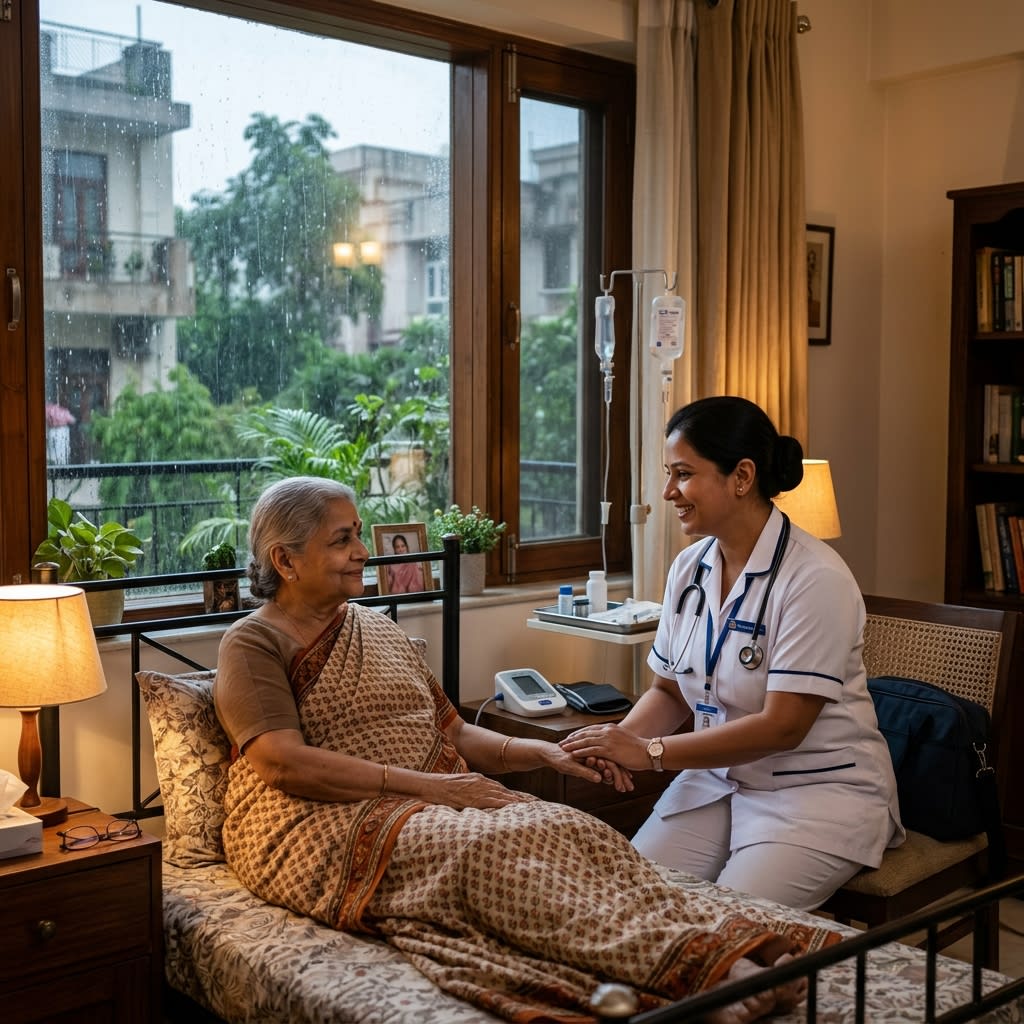
Delhi's summers are legendary for their brutality – temperatures regularly soar above 45°C (113°F), with heat waves lasting weeks. For elderly residents of Delhi NCR, this isn't just uncomfortable – it's life-threatening. Senior citizens are the most vulnerable population during heat waves, accounting for over 65% of heat-related deaths in India.
At NurseNest Care, our nurses are trained in heat-related emergency protocols. Here's our comprehensive guide to protecting your elderly loved ones during Delhi's scorching summers.
Why Elderly Are at Higher Risk During Heat Waves
- Impaired thermoregulation – Ageing bodies are less efficient at sweating and dissipating heat
- Reduced thirst sensation – Elderly people often don't feel thirsty until already dehydrated
- Chronic medications – Diuretics, beta-blockers, and anticholinergics increase heat sensitivity
- Cardiovascular strain – Heat puts enormous stress on an already weakened heart
- Cognitive decline – Dementia patients may not recognise heat symptoms or ask for water
- Limited mobility – May not be able to move to cooler areas or access water independently
Recognising Heat-Related Illnesses
Heat Exhaustion (Warning Stage)
Symptoms:
- Heavy sweating with cold, clammy skin
- Weakness, fatigue, dizziness
- Nausea or vomiting
- Rapid, weak pulse
- Headache and muscle cramps
Immediate action:
- Move to an air-conditioned or cool room
- Apply cool, wet cloths to skin (neck, wrists, forehead)
- Give small sips of cool water or ORS solution
- Loosen clothing and use a fan
- Monitor for improvement over 30 minutes
Heat Stroke (Medical Emergency)
Symptoms – CALL AN AMBULANCE IMMEDIATELY:
- Body temperature above 104°F (40°C)
- Hot, red, dry skin (sweating has stopped)
- Confusion, slurred speech, or unconsciousness
- Rapid, strong pulse
- Seizures
While waiting for ambulance:
- Move patient to coolest area available
- Apply ice packs to neck, armpits, and groin (major blood vessels)
- If conscious, give small sips of cool water
- Fan the patient continuously
- Do NOT give aspirin or paracetamol
Prevention Strategies for Delhi's Heat
1. Hydration Management
- Ensure minimum 2.5-3 litres of fluids daily (even if not thirsty)
- Offer water every 30 minutes during extreme heat
- Include ORS solution, coconut water, buttermilk (chaas), nimbu pani, and aam panna
- Avoid tea, coffee, and alcohol (they cause dehydration)
- Track fluid intake in a diary – set reminders for regular intake
- Watch urine colour – dark yellow means dehydration
2. Temperature Control at Home
- Keep the bedroom between 24-26°C using AC or cooler
- Use thick curtains or aluminium foil on windows facing the sun
- If no AC, use wet towels on fans and keep windows open at night
- Avoid using the kitchen during peak afternoon hours (12-4 PM) – cook in morning/evening
- If using a cooler, ensure regular water refilling and cleaning (to prevent bacterial growth)
3. Activity and Timing
- No outdoor activity between 11 AM and 4 PM – the peak heat hours
- Morning walks before 7 AM or after 7 PM only
- All appointments and outings should be scheduled early morning
- If going out, wear loose cotton clothes, carry water, and use an umbrella
4. Diet During Summer
- Cooling foods – Cucumber, watermelon, muskmelon, curd, mint, fennel (saunf) water
- Light meals – Avoid heavy, oily, and spicy food during extreme heat
- Fruits – Watermelon, mango (in moderation for diabetics), litchi, grapes
- Traditional coolers – Sattu drink, bael sharbat, thandai (without sugar for diabetics)
- Avoid – Street food, leftover food (spoils quickly in heat), excess salt
5. Medication Precautions
- Store medicines as prescribed – some need refrigeration in summer
- Consult doctor about adjusting diuretic doses during extreme heat
- Carry medicines in an insulated bag when travelling
- Never leave medicines in a car – temperatures inside reach 70°C+
How NurseNest Care Protects Elderly During Heat Waves
- Hydration monitoring – Nurses ensure regular fluid intake every 30-60 minutes
- Vital sign tracking – Temperature, BP, pulse monitored frequently; early detection of heat stress
- Environment management – Ensuring room temperature is safe and cooling systems are working
- Medication management – Proper storage and timing adjustments as per doctor's advice
- Emergency response – Trained in heat stroke first aid and when to escalate to hospital
- Nutrition support – Preparing cooling, hydrating meals suitable for elderly patients
NurseNest Care – Keeping Your Elderly Loved Ones Safe Through Delhi's Toughest Summers
Related home-nursing services
Hospital-trained registered nurses across Delhi NCR for the care needs this article covers.